As mobile networks evolve towards more flexible and open architectures, there is growing focus on how disaggregation can support scalable and efficient deployment across a range of environments. This includes understanding how different functional splits and transport options perform in practice, particularly as shared infrastructure and neutral host models become more prominent across deployments, as highlighted in SCF’s recent Market Forecast report.
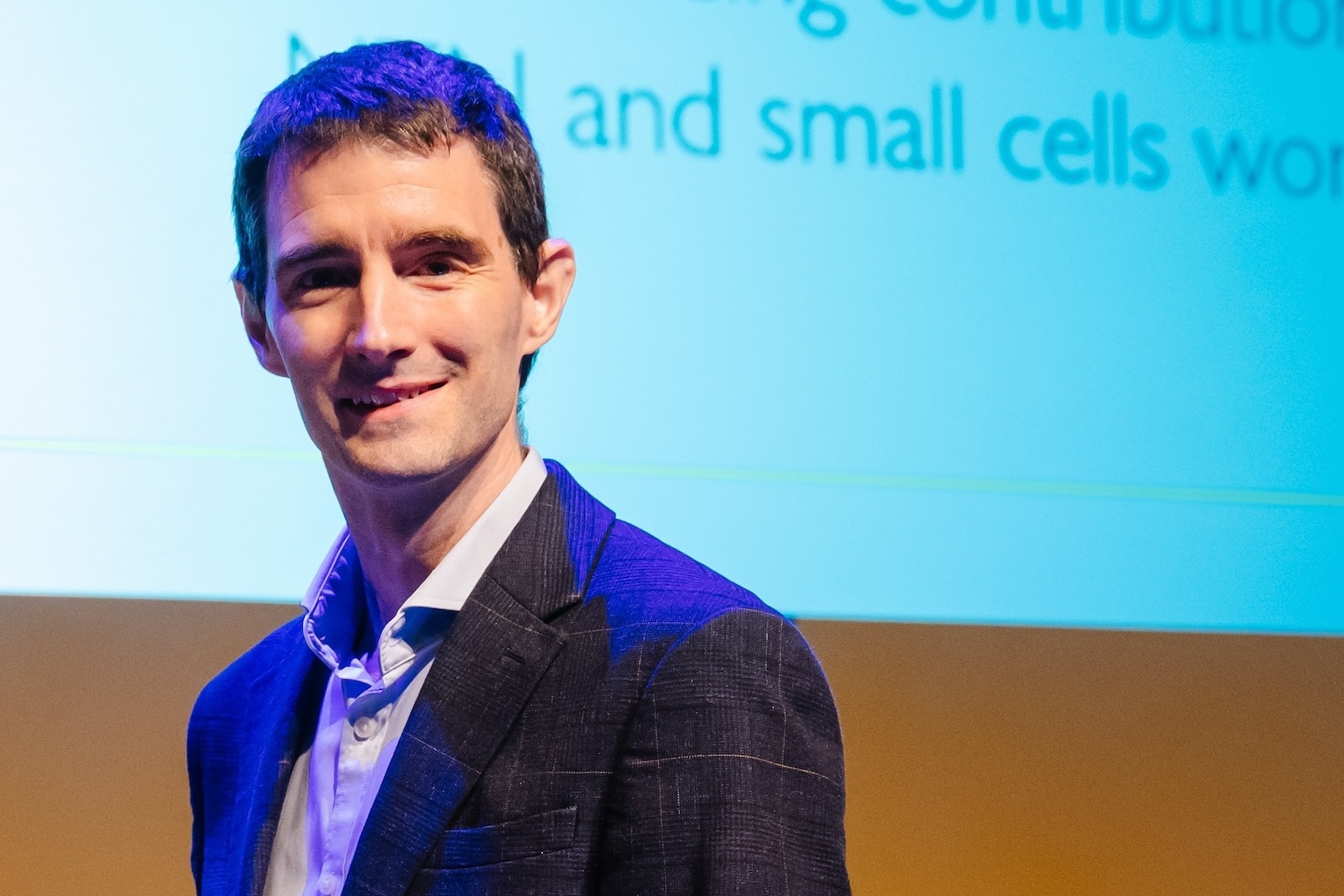
For Ryan Husbands, Research Manager in the Wireless Centre of Excellence at BT Group and Lead for Small Cell Forum’s DARTS use cases work item within the Neutral Host Working Group, this means applying practical analysis to help guide deployment decisions.
The work builds on SCF’s Disaggregated RAN Transport Study (DARTs) tool, focusing on how it can be used to assess transport requirements and support the selection of appropriate RAN configurations across different deployment scenarios.
Q&A with Ryan Husbands
How is the DARTS use cases work item building on SCF’s DARTs initiative?
“The work item focuses on what the DARTs initiative tells us, with the objective of demonstrating how the SCF DARTs tool can be used to assess and dimension transport requirements for different RAN disaggregation options across a range of real-world deployment scenarios.
“The aim is to provide guidance on selecting optimal functional splits, such as Split 2, 6, 7.2x and 8, for different deployment environments using transport bandwidth analysis. This includes highlighting how reference use cases, transport technologies, deployment architectures and functional splits impact xHaul performance in terms of bandwidth, latency, jitter and overhead.”
Why is this area of work important now?
“As networks evolve, scalability and agility are becoming essential to the deployment of network infrastructure. This is enabled by the modularity of network components, where disaggregation becomes more prominent.
“The DARTs tool supports this by enabling the provisioning of flexibility, helping operators and the wider ecosystem understand how different deployment choices affect network performance.”
What is your role within the work item?
“As Work Item Lead, I am responsible for guiding the direction of the DARTS use cases work and coordinating contributions across the group.”
What perspective and experience do you bring to the work?
“I bring insights from a Tier 1 operator perspective on the current state and future direction of mobile networks. My experience covers a broad range of wireless technologies, including virtualised RAN, massive MIMO, RF propagation and disaggregated RAN deployments.
“I have also contributed to several SCF work items and working groups, including Neutral Hosts, FAPI and nFAPI, 5G mmWave small cells, and small cell architecture and product definitions.”
What do you value about being part of SCF?
“I have been actively involved with SCF for around seven years, and BT has been a member since 2007. The Forum provides an opportunity to collaborate across the industry and contribute to work that supports practical deployment.”
SCF’s perspective
Simon Fletcher, Chief Strategy Officer at SCF and chair of the Neutral Host Working Group, commented:
“Ryan’s work builds on the DARTs initiative by applying it to real-world deployment scenarios. This is an important step in helping the industry understand how different disaggregation approaches perform in practice, particularly as shared infrastructure and neutral host models continue to evolve. The ability to assess transport requirements and deployment trade-offs will be key to enabling more flexible and efficient network architectures.”
About the Neutral Host Working Group
The Neutral Host Working Group focuses on the business models and technologies that support shared infrastructure, bringing together neutral hosts, operators and vendors to develop frameworks and guidance for multi-operator and alternative deployment approaches.
The group’s work includes frameworks for hosted RAN and shared infrastructure, as well as tools and guidance that support deployment planning, such as the DARTs initiative.
To learn more or get involved contact [email protected] or visit www.smallcellforum.org.