2012 Winners

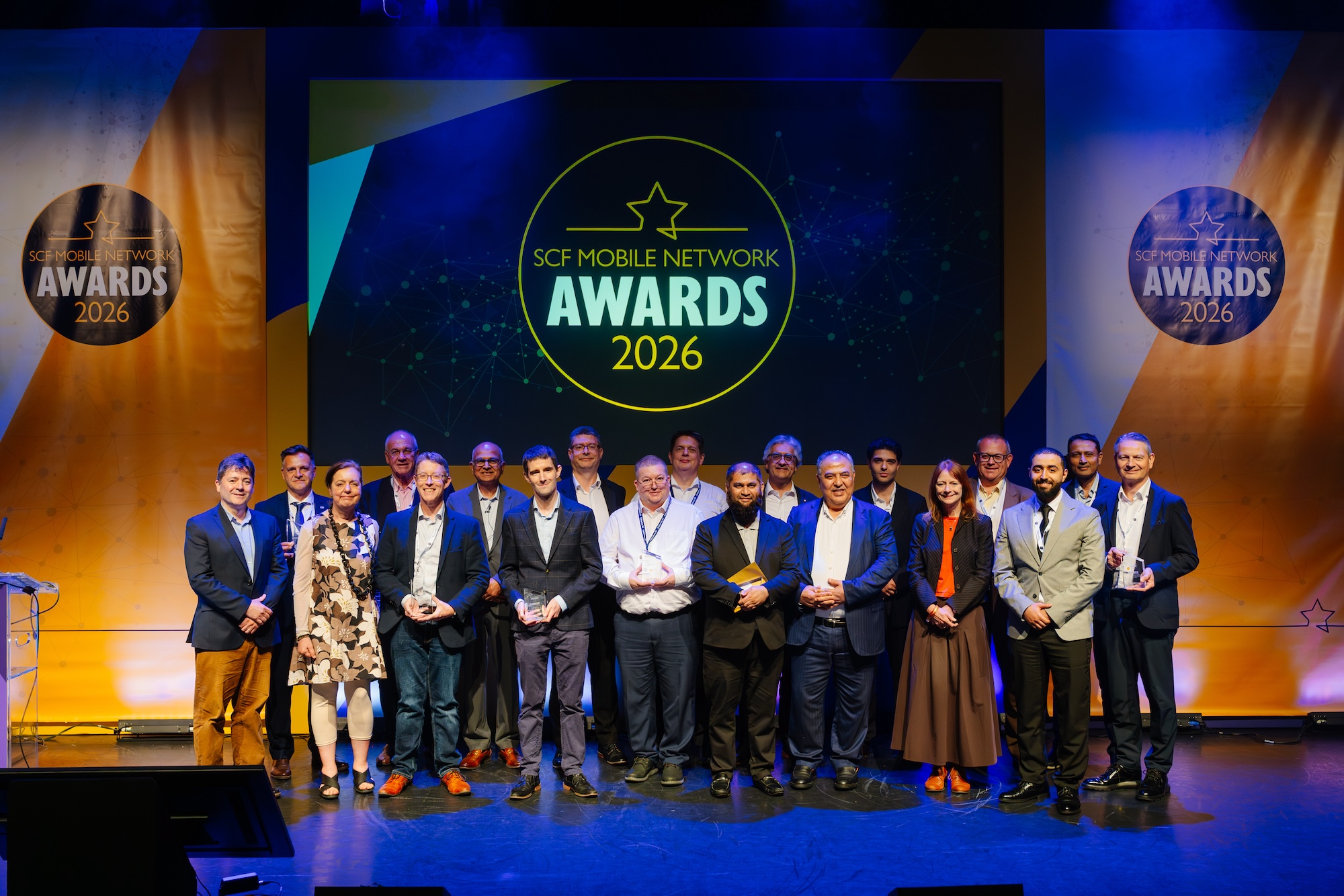
We have seen a record number of very impressive entries this year, clearly reflecting the meteoric progress of the industry in recent months. The winners were announced at our prestigious awards ceremony in London. We are proud to list the winners below.

1. Residential femtocell access point design and technology innovation (vendor)
Vodafone and Sagemcom3G Station Femtoplug

Vodafone has been very successful to stimulate customer demand and retail awareness for the innovative Femtocell technology across the world and so far pioneering 3G Station roll-out in 13 markets (UK, Spain, Greece, New Zealand, Australia, Ireland, Hungary, Netherlands, Czech, Romania, Portugal Qatar and Italy). The success of the adoption of Femtocells in all these markets and the commercial roll out has been driven by the fact that Vodafone has consequently driven Femtocells from a marketing and customer needs perspective, rather than a network extensions perspective in terms of design, form factor and development.

The new and re-shaped design of the 3G Station Femtoplug – announced as the successor of our Consumer Station – comes with several upgrades: the volume of the hardware has been decreased by 50% and it allows now up to 8 concurrent calls instead of 4 and HSxPA+ mobile data speed with up to 21,6Mbit/s instead of 7.2Mbit/s UMTS. Furthermore, the attractive round-shaped "plug" design prevents tangled wires and can be directly plugged into the power socket to retain the customers total numbers of plugs. The shape, the colour and the details of the Femtoplug fit perfectly into the portfolio of the Vodafone Connected Home product line and a packaging, designed by an awarded design company, translates the benefits of our Femtocells also in its outer appearance.

In addition, a dual vendor strategy drives the vendors to compete to achieve price and performance advantages and allows Vodafone to bring its very own CPE to an alternative vendor concentrator for the very first time.

2. Non-residential (enterprise and public access small cell) design and technology innovation (vendor)
Ubiquisys and IntelSmart cell devices

Smart cells Introduction

Smart cells are a new category of hybrid device based on Intel® architecture developed by Ubiquisys. They combine a cellular/WiFi small cell with an integrated, communications-tuned computing platform with local storage. In a fast-track development programme, we have already met a number of key milestones, including prototype demonstrations with live applications from third party developers. In the final demonstration before operator trials begin, smart cells will be shown at Small Cells World Summit running live on a UK operator's network.

Anatomy of the smart cell range

  • Intelligent HSPA/LTE small cell from Ubiquisys
    • 250mW hotspot
    • Adaptive behaviour with ActiveRadio® and ActiveSON® technology
    • Flexible IP-based backhaul options
  • Compact, comms-tuned compute platform designed and integrated by Ubiquisys and based on Intel® architecture:
    • Next generation communications platform from Intel with hardware accelerators
    • Ability to process a communications stream of up to 80Gb/s in real-time
    • Plug-in SSD storage > 40GB
    • Plug-in WiFi hotspot

Key capabilities

  • Real-time processing of the communications stream at the edge of the network
  • Platform for storing and serving cloud/core apps and media closer to mobile users
  • Proxy for mobile users to interact more intensively with cloud apps

Opportunity

Public access small cell hotspots are designed to serve mobile users in environments such as coffee shops, shopping malls, stores and airports. In these environments small cells provide high quality coverage and data rates close to headline levels. But they are typically connected to a heavily loaded commodity backhaul, which becomes the new bottleneck to mobile data performance. This is important because both the operator's core network and the cloud apps that most people use are also at the other end of this variable connection.

Smart cells overcome this difficulty by providing massive amounts of local processing power and storage at the edge of the network. They improve performance for mobile users whilst at the same time opening-up new business opportunities for operators, site owners, advertisers and apps developers.

How smart cells make a difference – EdgeCloud® applications

Backhaul optimisation

Using a cache app to maintain a local cache of data, informed by and available to both cellular and WiFi users. Environments vary, but backhaul savings of 40% are easily achievable and have been demonstrated.

  • Store video/image content locally on first view for subsequent use e.g. YouTube videos and the ad images within Facebook pages
  • Proactively download and store popular content in moments when backhaul is lightly loaded.

Content management

Storing specific content on the smart cell and serving it direct to mobile users. Examples include:
  • Maintaining location and context related information such as maps and tourist promotions on the smart cell.
  • Loading sports clips as they happen in a sports bar.
  • Storing broadcast content for ad-sponsored viewing in public places.
  • Maintaining rich media ads on a small cell.

Real-time processing

Smart cells have the processing power to perform activities that would normally only be possible within the core network, and which are often given as the reason for operators being reluctant to breakout internet traffic at the small cell. They include:
  • Anti-virus protection
  • URL filtering
  • Activities that rely on deep packet inspection (DPI).

Apps platform at the edge of the network

In addition to the applications already mentioned, there is a long list of important applications that would work better for operators and users alike if they could run closer to mobile users:
  • Local WiFi-cellular policy management – sophisticated, autonomous policy management that can sense relative loading, can work according to complex policies, and can interact with users to reach decisions – all without overloading the backhaul with policy "chatter".
  • Local CDN – content delivery for mobile devices brought closer to users on the move – extending the cloud.
  • Local virtual machines – powerful application capabilities that can set themselves up in response to user presence and policy.
  • Local upload proxy applications – the proxy application receives video/photo media from the smartphone very quickly, saving battery life and hassle, then gradually uploads it to the social media cloud application.

Milestones to commercialisation

  • Stealth mode until May 2011, when strategic collaboration announced
  • Lab demo at Intel Developer Forum, San Francisco, Sept 2011
  • Live prototype demo at Mobile World Congress (MWC) Feb 2012
  • Application demos by Edge Datacomms at MWC Feb 2012
    • Cache application for YouTube, Facebook and news site backhaul optimisation
    • Real-time McAfee anti-virus and URL filtering
    • WiFi Wakeup cellular-WiFi policy management
  • Live network demo with applications at Small Cells World Summit June 2012
  • Live demo on UK operator network, including applications, at Small Cells World Summit June 2012

About Ubiquisys

Ubiquisys is a leader in intelligent 3G and LTE small cells, with products deployed by operators around the world.

The Ubiquisys difference is intelligence: small cells that continuously adapt to their surroundings and dynamically interact with their neighbours. Operators benefit from low operating costs and efficient use of spectrum assets, whilst mobile users experience dependable voice and high speed data services. The Ubiquisys small cell range includes public-access hotspots, self-organising networks for enterprise, and modular residential small cells designed for home device integration.

3. Small cell network element design and technology innovation (open to all)
Nokia Siemens NetworksNokia Siemens Networks Flexi Zone suite

Operators need to constantly add capacity, improve user experience while lowering their TCO.

Current solutions like Macro or WiFi can continue to help with capacity but operators will eventually need to "densify" their network in order to reach the 1000x capacity required in 2020 and this can only be achieved using small cells. Yet, deploying large number of traditional small cells for capacity brings significant new challenges (interference, mobility, backhaul, interoperability, EPC/Transport impact, O&M, etc…) that none of the current Small Cell solutions addresses.

The Flexi Zone solution was designed starting from a blank sheet of paper to be the most cost effective & highest performing capacity solution using an underlay of coordinated small cells. Flexi Zone uses HSPA, LTE & WiFi to offload, add capacity and boost subscriber experience in indoor (public/enterprise) and outdoor street level hot zone environment as part of an heterogeneous network.

Flexi Zone features a novel zone architecture (a variant of NSN Liquid Radio baseband pooling concept adapted for small cells) composed of multiple low power access points coordinated via a localized zone controller that enables the operators to offer very high user experience while offloading low value internet traffic at the nearest internet POP (Point of presence) and by doing so significantly lowering transport & core networks costs.

Thanks to this architecture and the zone controller, Flexi Zone efficiently scales to capacity with up to 100 AP per cluster, while lowering the TCO by simplifying backhaul requirements, limiting the EPC impact, managing RF interferences and simplifying the operation paradigm. In addition Flexi Zone can be leveraged for enterprise coverage by offering separate policy, private LAN access, etc… Flexi Zone is a unique offering that is set to become the benchmark of a new kind of solutions that will help operators add capacity to existing macro networks and boost subscriber experience by allowing operators to pro-actively adapt the network capabilities in advance of evolving wireless broadband trends & always offer best in class user experience with the lowest TCO.

Key Benefits:

  • Unlimited capacity scaling with up to 100x AP per cluster that look and act as a single eNodeB
  • 50% TCO reduction compared to deploying traditional small pico and micro cells or adding new macro sites (cell splitting)
  • 10x Subscriber performance improvement in Hot Zones
  • Up to 80% saving on Transport and EPC cost with local traffic offload (internet, LAN, etc…)

The reaction from the launch at MWC2012 has been tremendous with press & analysts. Almost all operators have shown a very keen interest in the solution recognizing that this is the 1st of a kind solution that will help keep up with the capacity demand in hot zone while lowering their TCO. Many analysts and operators believe that Flexi Zone is a solution far superior to any other small cell solutions out there today.

GigaOM: "NSN's Flexi Zone is definitely the most ambitious hetnet proposal we've seen coming out of Mobile World Congress so far….it has huge implications for the heterogeneous networks (or het-nets) of the future"

Rethink Wireless: "One of the highlights of the MWC announcements is the unveiling of its most ambitious approach yet to the mobile RAN, called Flexi Zone."

4. Small cell service or application (vendor or operator)
QuortusEdgeCentrix: turning small cells into complete mobile networks

Providing cellular coverage to many rural communities and enterprises remains an uneconomical option for mobile operators. Existing options, such as the installation of a cut-down MSC at the network edge are too expensive due to the initial hardware CAPEX and the ongoing OPEX for backhaul and power and as such, these areas often remain without service.

Quortus EdgeCentrix transforms heavy-iron core networks into an edge-based software application that can be installed at small cell sites. By allowing the majority of core functions to be handled at the edge, including switching local calls, backhaul (which constitutes operators' single largest OPEX) and the traditional core are used only when necessary. When compared with alternative options, this innovation drastically reduces the cost of deploying and running mobile networks.

The increased cost-effectiveness of software mobile cores also opens up a number of new revenue opportunities for operators. Cellular services for rural communities have typically been deemed uneconomical due to their relatively small and diffuse populations combined with their distance from existing network infrastructure. However, by combining EdgeCentrix with solar-powered small cells and satellite backhaul this is no longer the case. Caching data content locally – such as weather reports and updates on market prices for produce which – is particularly important to what are largely agricultural communities. Turning small cells into complete mobile networks largely mitigates the problems associated with the high-cost/low-return normally associated with provisioning for these groups expanding operators' reach while also narrowing the digital divide.

Similarly, using a network of femtocells or picocells with EdgeCentrix makes it possible for operators to service enterprises whilst meeting their unique requirements. These can be integrated with a company's onsite voice and data network routing calls through internal PBXs and managing which data applications are prioritised and handled locally. Historically, enterprise IT departments have been reluctant to work too closely with mobile operators, but with edge-based intelligence they are able to gain greater control over mobile usage within offices as well as sweat their existing assets such as PBXs and onsite data services.

EdgeCentrix goes far beyond simply adding a Mobile Switching Centre (MSC) to the edge, facilitating new ecosystem based on network intelligence at the edge. The solution enables small cells to act as complete mobile networks capable of handling smart voice and data offload; session creation, switching & handoff; traffic compression & aggregation; support for all radio technologies; and edge caching and presence information for apps.

5. Innovation in commercial deployment (vendor or ecosystem)
Alcatel-LucentFirst Live, small cell LTE HetNet on a commercial network

Introduction & Drivers:

The story of small cells continues to evolve from "femto" to "small cells" to "HetNets", and from a technology primarily for the home to a technology for enterprises and even public service (e.g., metro cells). Initially envisioned for better coverage in an effort to lower churn, operators now use small cells to acquire new subscribers (e.g., Optus Home Zone) and to provide services end users expect anywhere, anytime, while avoiding the prohibitively expensive costs of new macro cell deployments. Still, challenges remain.

Interoperability a concern

Leveraging small cell technology to increase mobile broadband capacity requires macro and metro cells working together to deliver the lowest cost per bit and the highest end user quality of experience (QoE). MSPs who place low power metro cells for additional capacity within a macro cell network must address the issue of cell interference. But, beyond lab trials, there have been no examples of LTE metro cells improving a commercial network's macro infrastructure for increased urban capacity while successfully managing interference.

Commercial deployment proves concept

Recognizing the need for a commercial deployment that proves the viability of a heterogeneous network design, Alcatel-Lucent partnered with Telefónica, an assembled ecosystem of enterprise applications and device manufacturers to deploy the world's first, high capacity 4G LTE network with macro and metro cells operating together at Mobile World Congress 2012 in Barcelona. The network was the world's first of its kind in the 2.6 GHz frequency band and served as a revolutionary first step towards a real "HetNet", greatly improving coverage and capacity by bringing small cells closer to customers.

In this live, commercial deployment, conventional macro base stations co-existed with 4G metro cells working on the same frequency. Service delivery benefits of this type of deployment were demonstrated using a variety of band 7 (2.6 GHz) LTE devices from Samsung, HTC and Bandrich, including smartphones, tablets and MiFi 's.

Live network enabled by Alcatel-Lucent:

Based on Alcatel-Lucent Bell Labs lightRadio™ technology, this network deployment demonstrated that heterogeneous networks can be created under current standards and optimized to deliver the coverage and capacity required to meet end user service demands.

A complete network deployment

The network was built on 64 Telefónica cell sectors which covered all of the 365,000 square meters of the Fira Montjuic Exhibition Center in Barcelona, as well as other areas of Barcelona, including Placa Catalunya, Gracia CT, Camp Nou Stadium, and two hotels. Indoor and outdoor small cell coverage was provided by 11 Alcatel-Lucent 9768 lightRadio™ Metro Radio Outdoor (MRO) metro cells. Network capabilities were demonstrated on end user devices with advanced applications, such as cloud-based gaming from Breitling, augmented reality from MNC, live video streaming from LiveCast®, and video conferencing from Vidyo®.

Full-featured metro cell elements

The Alcatel-Lucent 9768 MRO is a next-generation metro cell operating in 3GPP Band 7 (2.6 GHz). It uses directional antennas to cost-effectively extend five-bar coverage and capacity to both indoor and outdoor locations. Each unit integrates two groundbreaking lightRadio cubes and a full-sector remote radio head (RRH) into a single compact form factor.

The lightRadio cube's integrated design is engineered to address all topology needs, including LTE deployment requirements, to enable the creation of a heterogeneous network. It extends the scope of small cells to provide capacity and coverage in high density metropolitan hotspots in a quick, efficient and low cost model. As a building block in any metro cell deployment, it makes substantial increases in 3G and 4G capacity practical because of its flexibility and performance:

  • Increases penetration of building/infrastructure
  • Increases capacity
  • Reduces interference between the small cell and the macro to ensure a higher QoE
Advanced interference management

The Alcatel-Lucent 9768 is also equipped with advanced interference management features, which are fully compliant with 3GPP Rel-8 standards:

  • Frequency Selective Scheduling, which avoids interference from other metros and macros
  • HARQ and Link Adaptation, which allows the cell to react to time-varying interference between the metro and macro
  • Closed Loop Uplink Power Control and Fractional Power Control, which maintain power levels during highly variable uplink interference
  • Control Channel Power Control, which provides robust control channel detection

In addition, the Alcatel-Lucent 9768 uses novel scheduling and power control algorithms that allows optimized interaction between metro and macro antennas as well as end user devices. These capabilities enable high data rates in the interference zones between adjacent metros and the metro/macro antennas.

Real-world use demonstrates benefits:

By using the advanced capabilities of the Alcatel-Lucent 9768 in this live LTE deployment with Telefónica, Alcatel-Lucent demonstrated how small cell technology can be leveraged immediately to improve capacity and coverage cost-effectively for advanced applications.

The network provided speeds of up to 10 times those offered by a 3G network, with download speeds of 100Mbps, upload speeds of 40-60 Mbps and latency times of approximately 20-25 milliseconds. Bell Labs simulation studies indicate that as much as a 10 fold increase in capacity can be made available to users with this type of deployment compared to a conventional network. The network in Barcelona was engineered to provide a 400% increase in capacity which was demonstrated using a variety of video based applications including an HD feed to a local TV news station... This type of network uses 35 percent less power and delivers a 50 percent total cost of ownership savings, compared to conventional macro cell deployments.

About Alcatel-Lucent:

With operations in more than 130 countries and one of the most experienced global services organizations in the industry, Alcatel-Lucent is a local partner with global reach. A leader in mobile, fixed, IP and optics technologies and a pioneer in applications and services, the company sees small cells as a fundamental building block of converged, IP, more flexible and smarter networks. To date, Alcatel-Lucent has 36 commercial deployment agreements and over 20 ongoing trials of its end-to-end femto/small cells technology.

For more information, visit: http://www.alcatel-lucent.com/wireless/femto_small_cells.html

6. Commercial deployment – innovation in commercial deployment (operator)
SK Telecom, Contela & MindspeedThe world's first data-only femto service

Femtocells are used to enhance voice service for poor coverage areas. However, nowadays a number of 3G operators are moving into public-access femtocell markets beyond the residential areas.

SK Telecom, a world leading 3G network operator deployed the world's first data-only 3G Femtocell service. The main purpose of public-access femtocell is to offload explosively increasing mobile data traffic which was caused by rapid growth of smartphones/tablet PCs.

Manufactured by Contela and powered by Mindspeed's small cell technology the Data Femtocell is optimized to offload data traffic and solve congestion issues. It does not handle voice traffic, which is instead directed to the existing macro network. SKT chose this solution to suit the particular market conditions in Korea, as existing voice coverage is excellent, both indoors and out. However the number of smartphone users in the country has leapt from less than a million at the start of 2010 to more than 10 million. The consequent growth in data traffic has pushed the network to its limits, necessitating the rapid implementation of a data offload strategy.

The following are key findings of our innovative solution for public-access femtocell service.

  • Data only service implementation without voice quality degradation
  • Even though femtocell can support high data throughput, voice service is vulnerable to public access femtocell because of its limited RF coverage. So we made a scenario of forced hand-over which ensures all the voice call setup to be redirected to more stable macro zone. We also developed several very sophisticated hand-over algorithms to get a best quality of service in various RF environments.
  • Our solution includes interference mitigation method through Macro to Macro Inter-FA Handover instead of Hand-In (Macro to Femto) and Inter FA Hand-Out(Femto to Macro)
  • In-building Solution : One of the most difficult hurdles to deploy femtocell in public place is to make an optimized RF zone which requires expensive costs like as on-site RF measuring and TX power control for each site. In some sites, we solved this problem by using ready-made environment. It is integrating femtocell with legacy in-building DAS(Distributed Antenna System) which means femtocell insures safety of RF environment without further field engineering
  • CS Fall Back(CSFB) Feature for LTE service users
    SK Telecom launched LTE service July last year and is getting subscribers rapidly. 3G and LTE concurrent service environment required a feature upgrade for dual mode UEs to get a LTE data service even though located in femto zone. SK Telecom, Contela and MSPD make an effort to prepare a scenario which should be developed before the number of LTE subscribers is insignificant. SK Telecom, Contela and MSPD aggressively realized the world's first CS Fall Back in Femtozone. Therefore, LTE users also can enjoy the voice service freely in Femtozone.

We suggest global operators experiencing data overload issues see how the SK Telecom deploys the femtocell solution. Thereafter, they experience the effects of its data offload with avoiding interferences and reduce the trial & errors in the process of public-access femto deployments.

7. Commercial deployment – progress in deployment (operator)
VodafoneWorldwide deployment centered around customer needs and benefits

Innovation, passion and customer responsibility are the basis of continuing success and development of all enterprises worldwide. Offering excellent and innovative network solutions as a mobile network operator is therefore a logical step to ensure success in a fast moving market. Vodafone is one of the industry's leading small cell technology pioneers and has been at the forefront of Femtocell and Microcell design, development and commercial implementation. We are utilizing our portfolio of small cell products, across international markets, to deliver coverage and capacity for 2G, 3G, and WiFi. We have and will continue to execute trials to ensure we can extend our small cell portfolio to LTE. In particular, we continue to work hard to maintain our position as a market leader in small cells. With the 3G Station portfolio of Femtocells, Vodafone reacts on the growing need of fast mobile data and expectations of outstanding voice quality. We have pioneered the testing, evaluation, and integration of market leading features and functionality, and have ensured that our implementation delivers a truly differentiated Femtocell experience in the marketplace.

First perceived as a highly "technical" topic, the advantages of Femtocells needed to be translated into benefits for our customers. To this day, Vodafone has been very successful in stimulating customer demand and retail awareness for the innovative Femtocell technology across the world and so far pioneering 3G Station roll-out in 13 markets (UK, Spain, Greece, New Zealand, Australia, Ireland, Hungary, Netherlands, Czech, Romania, Portugal, Qatar and Italy). In total, Vodafone has introduced and supports in the field five consumer Femtocells, four enterprise Femtocells, and four public Femtocells. Of particular note, the first fully independent functionality stack with integrated provisioning management for consumer CPE's has been introduced and set up by Vodafone within this project.

The success of the adoption of Femtocells in all these markets and the commercial roll out has been driven by the fact that Vodafone has consequently developed Femtocells from a marketing/customer needs perspective, rather than a network extensions perspective.

Critical was to make the product a value proposition, easy to set up and use as well as fitting into the customers personal home environment. That means that each product of the 3G Station portfolio has to be easy to handle for all our customers, in terms of

  • Setting it up either at home or in the office, without professional support and without technological background. A simple, graphical Quick Start Guide fitting on a single A4 sheet now contains all necessary information to bring a perfect Vodafone network into the buildings.
  • Working with all the different access opportunities given all over the world, from DSL to satellite.
  • Using a simple registration process for the Femtocell to use it either in an open access mode or a managed closed mode, depending on the customer's needs.

Since the Vodafone 3G Stations are meant to be positioned near the router, it was also important to emphasise the outer appearance and make it part of an elegant home or office referring to the design of other Connected Home products from Vodafone. Furthermore, all three products of the 3G Station portfolio combine the excellence of newest technology standards, in terms of security and mobile network specifications, with a pleasant design.

From the early formation of the industry, Vodafone has pioneered Femtocell technology and developed network solutions, support systems, and creative propositions with consumer focused products. We have driven the Femtocell ecosystem to offer technical Femtocell systems ready to support live commercial propositions for our customers since early concept discussions in 2005.

This ecosystem of services, industrial design, value propositions and leading technology has led to very good customer demand in the countries launched. Our customers have rewarded us with churn decrease and a steep increase in NPS (Net Promoter Score), increased voice as well as data usage. For this reason, we do not believe that this achievement can be matched to the same level of quality, performance and experience in any other market by another operator.

References:
Customer feedback (Twitter and e forum):
Twitter: "We have had FULL 3G SIGNAL on all of our phones-anywhere in the house! I honestly can't believe it. It works perfectly."
Radeeboi: "Yababadoo the Vodafone box is working – and woohoo full strength signal all over the house :)"
VF NZ: http://www.youtube.com/watch?v=8u2AFnjXIl0 (Home)
or http://www.youtube.com/watch?v=dQv_gQjVEvs (Business)
VF IT: http://www.youtube.com/watch?v=vx4i465vM8c
VF IE: http://www.youtube.com/watch?v=XSg28cbIXOk
VF UK: http://www.youtube.com/watch?v=vaCvJjh0zps

8. Enabling technology (components, subsystems, modules, software, etc)
RadisysNew multi-standard SoC for ultra-high capacity small cells

The Radisys Trillium TOTALeNodeB enables telecom equipment manufacturers (TEMs) and operators to dramatically reduce the required investment and development time for LTE small cells. The solution is helping to make LTE small cells a reality in 2012 by overcoming significant technological and cost challenges.

Launching the first LTE Femtocell

The solution was launched in February 2012 and is a vital enabling technology underpinning the industry's first LTE Femtocell, as launched by Korea Telecom (KT) at this year's Mobile World Congress.

With functionality enabled by the TOTALeNodeB, the KT LTE Femtocell is a small-sized, low-power, low-cost solution, that can easily and quickly be scaled up in LTE roll-outs. It.is capable of handling wireless channel protocol standards, and handling call-processing and authentication requests.

Korean small cell development companies Juni and Dongwon employed the complete software solution, integrated with silicon from Mindspeed Technologies Inc., to take a leadership position in the Korean market.

"Using Radisys' Trillium software has enabled us to be a leader in the fast-paced Korean mobile industry," said Mr. John Kim, CEO of Juni. "Radisys' quality assurance of the integrated TOTALeNodeB product, coupled with the expertise provided by the Radisys team, instils confidence and allows us to get a complete small cell LTE solution to market quickly and with minimal risk."

What makes this different?

This is a first to market solution, and one that differs fundamentally from existing offerings in the industry.

Traditional software approaches lack the level of integration required to truly change the economics of LTE small cell deployment, placing too much on us on TEMs or operators to invest in their own R&D to complete the solution.

Radisys has invested heavily to generate sophisticated algorithms that can deliver radio resource management (RRM) and SON, while maintaining the flexibility to allow TEMs and operators to control features and the future direction of the product. With no standard for software writing for RRM, SON and OA&M, thousands of man hours of investment is needed and Radisys has brought its expert team and many years of experience to build a differentiated offering to the market.

A complete solution

As a complete software solution, Trillium TOTALeNodeB dramatically simplifies the development and integration of LTE small cells. Typical product development time for operators and is cut by as much as 50%.

TOTALeNodeB includes the Trillium LTE eNodeB application, RRM, radio environment monitoring (REM), SON, schedulers, and all of the Trillium protocol layers. Its modular design provides the flexibility for TEMs to choose to leverage Radisys' off-the-shelf RRM, SON and scheduling algorithms or to implement custom algorithms.

Radisys has added the application layer to provide a full solution, enabling TEMs and operators to choose from a range of integrated packages on a variety of chipsets to get a complete solution for migrating from 3G to LTE. The solution is supported by professional services, provided throughout the development and deployment process.

A complete feature set

TOTALeNodeB includes:

  • Comprehensive radio resource management (RRM)
  • Self-Organizing Networks (SON) capability)
  • Radio Interference Management and Radio Environment Map (REM))
  • Complete OA&M solution based on TR-069 and TR-169 standards
  • Compliance with 3GPP small cell standards
  • IOT with leading femtocell gateway vendors
  • Trillium LTE protocol stacks supporting Layer 2 and above

TOTALeNodeB is built on the Radisys Trillium LTE eNodeB protocol stacks, licensed to over 20 customers, which provides the flexibility for TEMs to leverage Radisys' off-the-shelf RRM, SON and scheduling algorithms or to implement custom algorithms.

Fully integrated, flexible software

Trillium TOTALeNodeB provides TEMs with a complete, integrated LTE eNodeB that is verified across a range of ten leading small cell system on a chip (SoC) platforms.

The software is sufficiently flexible to be used with any operating system on any chipset.

This enables TEMs to choose from a variety of SoCs and transfer to a new silicon platform as market dynamics require – critical as the market for small cells continues to grow and requirements change.

TOTALeNodeB enables TEMs to comply with operators' specific requirements, while reducing time to market and financial risk. TOTALeNodeB is provided as source code so TEMs can customize and enhance the product for specific operator requirements. Radisys provides interoperability testing, technical support, and ongoing maintenance to ensure the integrated solution is optimized for the operator's network.

Integrating LTE and 3G

As LTE rolls out, operators will still need to support a mixed subscriber base for both 3G and LTE services. TOTALeNodeB can be deployed alongside the Radisys Femtotality3G WCDMA small cell solution to create a dual-mode deployment.

This enables operators to reduce backhaul bandwidth cost, site acquisition costs and the cost of the infrastructure itself.

Hurdling major technology obstacles

The Radisys Trillium TOTALeNodeB uses advanced software and design to tackle the technology challenges facing the large-scale deployment of small cell architectures in LTE networks – principally interference mitigation and radio resource management (RRM).

On the interference mitigation side, Radisys has deployed a number of techniques to overcome challenges in both the downlink and uplink:

  • Downlink techniques
    1. Optimised Power Setting to ensure transmission at no higher power than required to obtain the desired coverage
    2. Optimised PCI selection to minimize RS collisions with nearby macrocells
    3. Soft frequency reuse to manage transmission at minimal (or zero) power in certain resource blocks
    4. Frequency Partitioning approaches to optimize use of available spectrum
    5. Time Offset to ensure synchronized operation to nearby macrocells, and offset transmission as required
  • Uplink techniques
    1. Setting uplink and UE power levels to ensure power received at nearby macros is appropriate
    2. Transmitting overload indications from macrocells to small cells, and between small cells using the X2 interface
On the RRM side, Radisys has integrated key features to improve performance:
  • Dynamic call admission control taking into account radio link congestion, backhaul limitation and operator specified policy
  • Support for Hybrid Access control enabling preferential treatment of named subscriber groups while still delivering general capacity improvements
  • Handover across various small and macro cell layers including small cell to cmall cell and small cell to/from macro support

Radisys TOTALeNodeB deserves to be recognised in the Small Cell Industry Awards for enabling the small cell industry to thrive and flourish in the LTE world.

9. Social vision – promoting small cells for social/economic/environmental development (open to all)
VodafoneFemtocell solutions to enhance sustainable service access for rural and remote customers

Mobile connectivity plays a vital role in keeping communities in touch and helping to support rural economies. The economics of getting mobile coverage into rural areas by traditional methods, however, can mean that some communities have less opportunity than others to take part in the growing smartphone revolution.

Vodafone have been working with its technology suppliers, as well as industry partners, to develop products and execute commercial trials that enable a very real opportunity for rural communities to play a positive role in extending mobile coverage locally.

Vodafone continues to drive sustainable development of market propositions to enrich our customers' lives with connectivity.

Vodafone's technology trials have allowed the testing of the latest versions of 'femtocell' technology to provide 3G signals in local and remote areas and to determine if the co-operation can work successfully.

For example, Vodafone UK, has been working closely with partners on innovative ways to boost mobile coverage, in areas such as East Garston. The UK trial included ensuring the right network connectivity is in place to support femtocells, as well as working on methods to camouflage deployments such siting some in payphones. Vodafone are exploring options to extend the learning from deployments such as East Garston, and working to support deployments in an additional 12 UK communities and potentially help bring improved mobile coverage to more rural areas.

We have received excellent support from the communities for this initiative.

Richard Benyon MP for Newbury and Parliamentary Under-Secretary for the Natural Environment and Fisheries comments: "I welcome the news that Vodafone is extending the 'open femto' scheme that I helped start in the East Garston part of my constituency. It means that other rural communities will be able to benefit from improved mobile coverage and gain access to the mobile internet. As a Minister with responsibility for rural broadband and an MP with a rural constituency, I know that there is as much eagerness in rural Britain for the latest smartphones or tablet computers, as there is in towns and cities. There is also just as much need for connectivity and schemes such as this one can help make this a reality, bringing mobile coverage to areas that are hard to reach by traditional means."

Damian Collins MP for Folkestone and Hythe, and member of House of Commons Culture, Media and Sport select committee, comments: "I look forward to talking to Vodafone to explore how this scheme can help bring mobile coverage to rural communities that increasingly need it. I believe MPs have a pivotal role in bringing together companies like Vodafone with local communities in order that there is a positive, collaborative approach to investing in vital infrastructure such as mobile telephone and internet coverage."

We continue to drive the exploitation of small cell technology for the extension of sustainable service access for rural and remote customers. This is why we believe that Vodafone Group deserves the award for Social vision – promoting small cells for social/ economic/ environmental development.

A final message from Guy Laurence, Chief Executive, Vodafone UK "Hundreds of thousands of people across the country use Vodafone Sure Signal every day to boost their 3G signal at home. Now we are extending this ground-breaking femtocell technology to make a real difference to rural communities. Bringing mobile coverage and the benefits of the mobile internet to rural areas involves not just us, but local people, politicians and other infrastructure players all working together. We are confident that everyone will step up and help give rural communities a real boost and look forward to extending our trial."

10. Judges' choice (open to all; discretionary)
ip.accessNetwork Orchestration System amd nanoConverge Solution

nanoConverge

The nanoConverge solution from ip.access enables 3G small cells to be configured and supported from an existing 2G small cell gateway and management system. It will also enable 2G, 3G and future 4G small cells to be supported by an existing 3G small cell gateway.

This is a world first. There is no other commercially available converged Radio Access Network for controlling 2G, 3G and in future 4G small cells.

This means that the company's range of small cell systems will comprise all the key components operators need to drive down costs while increasing coverage and capacity – access points, a converged network management solution and converged radio access gateways.

The nanoConverge solution builds on an impressive track record of firsts for ip.access - the company was the first to deploy public access picocells using IP backhaul; its award-winning Oyster 3G femtocell technology was the first publicly demonstrated femto solution; and it was the first vendor to pass 500,000 3G small cells deployed. Oyster 3G is the femto technology 'inside' AT&T's 3G MicroCell: the world's largest consumer femtocell roll out.

Now, with nanoConverge, ip.access is once again leading the way in small cell technology innovation.

The mobile network infrastructure market is currently heavily focused on LTE network roll-out, including the envisaged het-net approach of a network of small cells within the macro overlay. The ip.access nanoConverge solution will have a vital role to play helping operators deploy LTE small cell technology on existing 3G small cell RAN infrastructure. This is truly innovative and new.

But as well as future LTE roll-outs, our nanoConverge solution provides benefits today to the hundreds of network operators in the GSM world that need to add more public and private 3G coverage and capacity at minimal cost. Only ip.access and the nanoConverge solution makes it possible today for operators to do that by upgrading and re-using their existing 2G small cell radio access network. This is also truly innovative and new.

The nanoConverge solution provides operators with an easy migration path and immediately allows the company's existing nanoGSM picocell customers to introduce 3G small cells onto existing 2G systems.

It achieves this by running the nano3G® Access Controller and IPsec gateway on a blade within the existing Basestation Controller in nanoGSM picocell deployments. This simple addition upgrades the 2G platform's capabilities and allows a single gateway to support up to 500 nano3G small cell Access Points.

The nanoConverge solution will effectively allow operators to upgrade their existing 2G and 3G deployments, maximising and extending the life of their current infrastructure investment. The solution provides mobile operators with a single converged 2G and 3G small cell Radio Access Network, and a future upgrade path to small cell LTE deployments.

Furthermore, alongside the powerful financial arguments presented by extending the life and ROI of existing infrastructure investment, the nanoConverge solution offers operators much faster time to market with next generation small cell deployments, enabling the benefits of accurately targeted coverage and increased network capacity to be obtained much quicker than with a new small cell network deployment.

By converging the Radio Access Network technology, ip.access is enabling operators to respond that much faster – and with pinpoint accuracy – to issues created by traffic hotspots. In addition, the capability of femtocells to auto-configure to their location, and the pre-provisioning of picocells which are integrated with network planning tools, all serve to ease deployment.

Nick Johnson, ip.access founder and CTO, says: "Our nanoConverge solution will make 3G and 4G small cell network planning, upgrade and roll-out easier and more economical for operators all over the world. What's more, the nanoConverge solution will enable operators to make the most of existing infrastructure investments by allowing 2G, 3G and LTE small cells to be controlled and managed from a common platform – it represents true convergence of past, present and future small cell network roll-outs."

Peter Jarich, Mobile Ecosystem service director, at leading analyst house Current Analysis says: "Even operators and vendors who'd previously questioned the value of small cells now acknowledge their importance, not only for next generation networks but also to provide extra coverage and capacity for existing mobile networks. A common small cell core, addressing multiple radio access technologies plays to this importance by helping keep operational complexity and cost down."

Launched at the 4G World Summit towards the end of 2011, nanoConverge has quickly moved to trial and commercial deployment in the networks of one multi-territory operator. Other commercial trials are also underway in Europe and the Middle East.

ip.access Network Orchestration System

Background

Last year, ip.access invested to enhance its Network Orchestration System (NOS) for mobile operators. The NOS is basically a core management system for the small cell layer of the network. It provides a unifying mechanism that enables operators to manage and control the small cell layer and interact with the operator's macro network management architecture.

As a result of the investment, the NOS has effectively become more than a network management system – it is now a dynamic service enablement and improvement engine that gives operators greater control over the small cell layer, an enhanced ability to launch services at the small cell level, and improved interaction with the SON at the macro layer.

NOS Features

There are now four NOS-enabled services in the ip.access portfolio. These enhanced services are either commercially introduced, or currently in trials with operator customers.

Oystercatcher

The Oystercatcher service runs on the NOS. It enables operators to better manage and control the performance of individual small cells within the layer. Oystercatcher works alongside existing OSS tools to capture data from the small cell layer and use remote diagnostics and fine-tuning to adjust small cell settings to improve performance.

These techniques can be particularly important when new software upgrades are release to popular handset models, or when adjustments and improvements are made at the macro level.

Oystercatcher's management techniques can be applied across the entire ip.access 3G small range including consumer deployments as well as Enterprise and public access cells.

One API

The NOS includes full compatibility with the GSMA's OneAPI programme which will enable the provision of new services across the small cell layer from the NOS.

The first NOS-enabled OneAPI service being trialled is a location-based application. Currently, ip.access is working with a major global operator looking at the deployment of open access small cells within retail centres and the enablement of a range of location based services using the OneAPI protocol.

NOS-assisted SON

Self-Organising Network systems are used by operators to improve network performance and automate planning techniques. These systems work at the macro layer level and are adept at adjusting and coping with change at that level. For example, the SON can help an operator to add another macro-layer cell to a dense urban environment without interfering with neighbouring cells.

However, the appearance of a large number of public access small cells, within a macro overlay network creates a number of issues for the SON which cannot manage that layer. The small cells will need to provide hand-off to one another and to the Macro network and the SON cannot manage the "Automated Neighbour Relations" at the Small Cell Layer. This will create a significant amount of manual work for network planners.

The NOS from ip.access provides a small cell management layer to operators that interacts with the existing SON to provide the relevant information across the network and automate what would otherwise be a very lengthy manual process.

Self care and start-up

The NOS enables network operators to quickly launch self-configuring small cells into their network at a residential or enterprise level by providing a link to operator BSS/OSS systems from day one.

Operators looking at small cell deployments often experience considerable time-lag between the trials and the commercial introduction of the service. This is usually the result of the changes they need to make to their own customer management systems to deliver the "out-of-the-box" self-configuring start up associated with the residential and small business market.

Customers buying a small cell for home or business use expect to be able to switch it on and make calls. To enable that feature the small cell must be able to talk to the operator's existing management systems – and making those adjustments to the core management systems can take a considerable time to implement, delaying the launch of service.

The NOS from ip.access can provide a layer of support that manages the self-configuring process and links directly into the operator's existing systems. This service allows operators to make small cells commercially available immediately after completing technical trials. The NOS self care system can become a permanent feature of the implementation, or can be used as a start-up measure while the necessary changes are made over time to the operator's existing customer management systems.

The End-to-End Approach

The NOS from ip.access is a key part of the company's end-to-end approach to the deployment of small cells. The company provides not only a wide range of public and private small cell access points, but also all the necessary network hardware and supporting software for operators to effectively roll-out and manage the small cell layer.

The NOS provides a fully standardised solution which incorporates the 3GPP standards to provide connectivity to external RF Planning, Provisioning, Alarming, and Centralised SON Systems. In addition, the NOS manages the smallcells utilsing the Broadband Forum TR-069/TR-196 Standards which provides an Operator with the capability to support zero-touch provisioning along with true plug & play deployments of small cells to enable mass-scale consumer market take-up.

11. Individual contribution to Small Cell Forum activities (judged by Small Cell Forum group chairs)
12. Chairman's award