As non-terrestrial networks become an increasingly important part of the connectivity landscape, there is growing interest in how technologies and approaches already established in terrestrial networks can support their development.
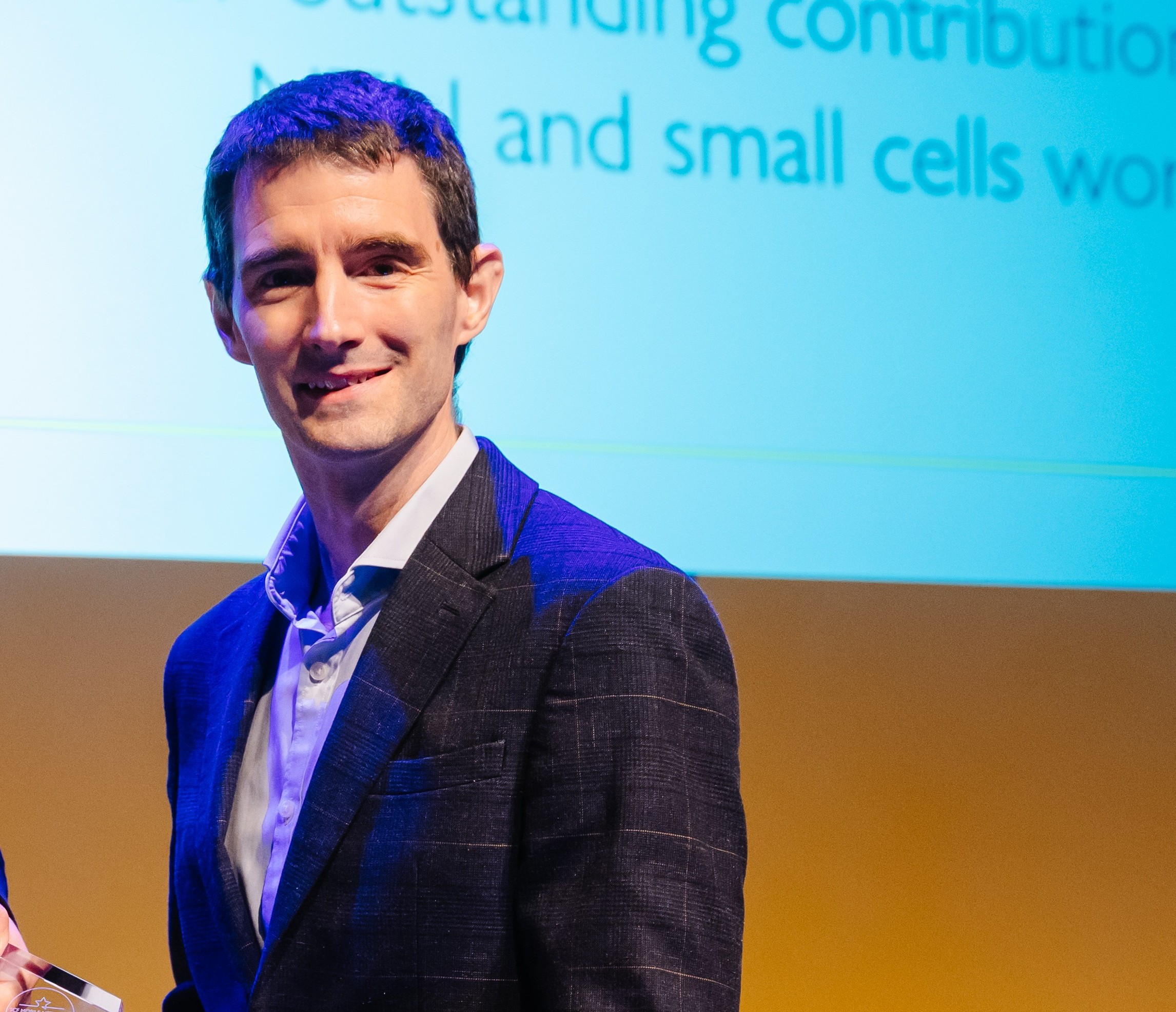
For Professor Rob Maunder, Founder and CTO of AccelerComm and Lead for the recent phase of SCF’s NTN Work Item and study Small Cells and Non-Terrestrial Networks, this means exploring how small cell expertise can be applied to regenerative satellite systems, while recognising the very different environments in which they operate.
The next phase of the work will focus on the components and interfaces within regenerative satellite base station architectures. The NTN Work Item sits within SCF’s Products, Components and Solutions Working Group. In parallel, SCF is developing FAPI v11 to incorporate NTN features.
Q&A with Rob Maunder
How would you describe the current focus of the NTN Work Item?
“Non-terrestrial networks have some differences from small cells – their cells are tens of kilometres wide for a start – but regenerative NTN satellites also have many similarities to small cell base stations.
“Following our last paper, Small Cells and Non-Terrestrial Networks: Common Challenges and Common Solutions, we are now looking at how those findings can be applied to the architecture of the base stations integrated into regenerative satellites, including the components and interfaces involved.
“In parallel, SCF is defining a new version of the FAPI standard, FAPI v11, which incorporates NTN features. This will standardise the interface between the hardware-accelerated Layer 1 of a regenerative satellite base station and its software-based Layer 2 and Layer 3.”
Why is this work important for the industry?
“Regenerative satellites bring more of the base station functionality onto the satellite itself. Although the operating environment is very different, there are areas where we can draw on technologies, architectures and interfaces that are already well established in terrestrial networks.
“The opportunity is to understand where existing small cell approaches can be applied and where NTN introduces different requirements, helping to inform the development of regenerative satellite architectures.”
Why is AccelerComm involved in this work?
“AccelerComm is contributing to the components and interfaces aspect of the regenerative satellite base station architecture.
“In particular, we are looking at the different processors that can be deployed into a regenerative satellite, where they will face extreme vibration, radiation, vacuum and thermal cycling challenges. We are also looking at the new NTN FAPI interface between these processors, as well as interfaces with other payload components such as beamformer ICs.”
What perspective and experience do you bring to the work?
“At AccelerComm, we have developed deep insights into the advantages and disadvantages of a wide variety of processor types, including their radiation tolerance, capacity, power consumption and cost.
“These insights allow us to translate system requirements, such as the number of cells, bandwidth, carrier frequency and number of users, into payload requirements, including which chips are needed, how many of them, their power consumption and the bill of materials.
“I am also bringing experience accumulated through many engagements with satellite network operators, satellite manufacturers and payload manufacturers over the last five years.”
What do you value most about being part of SCF?
“AccelerComm joined SCF in 2021. The FAPI and nFAPI standards have been vital for aligning our Layer 1 development with the Layer 2 developments of our partners, enabling seamless integration.
“But more than this, it is the community aspect of SCF that I personally enjoy most. SCF is much greater than the sum of its parts and this is immediately evident when putting our heads together with world experts in SCF meetings.”
SCF’s perspective
Prabhakar Chitrapu, Chair of Small Cell Forum commented:
“Rob brings valuable expertise in baseband processing and satellite architectures to this work. As SCF explores how its experience in small cell products, components and open interfaces can support non-terrestrial networks, that combination of technical knowledge and practical industry experience is particularly valuable.”
About the Products, Components and Solutions Working Group
The Products, Components and Solutions Working Group develops technical parameters, architectures and supporting material that help vendors and deployers build interoperable small cell solutions
The group’s recent work includes SCF’s report Small Cells and Non-Terrestrial Networks: Common Challenges and Common Solutions and 5G mmWave Small Cells
To learn more or get involved contact [email protected].