In 2025, BT, in collaboration with Belfast Harbour and UK Government, delivered Project Harlander – a pioneering initiative that brought Northern Ireland’s first autonomous automated public shuttle service (APSS) to the Titanic Quarter of Belfast Harbour.
As part of this, BT built and managed both public and secure private 5G networks across the estate to provide a high speed and reliable mobile connectivity required to support the smart technologies connected to the autonomous vehicle.
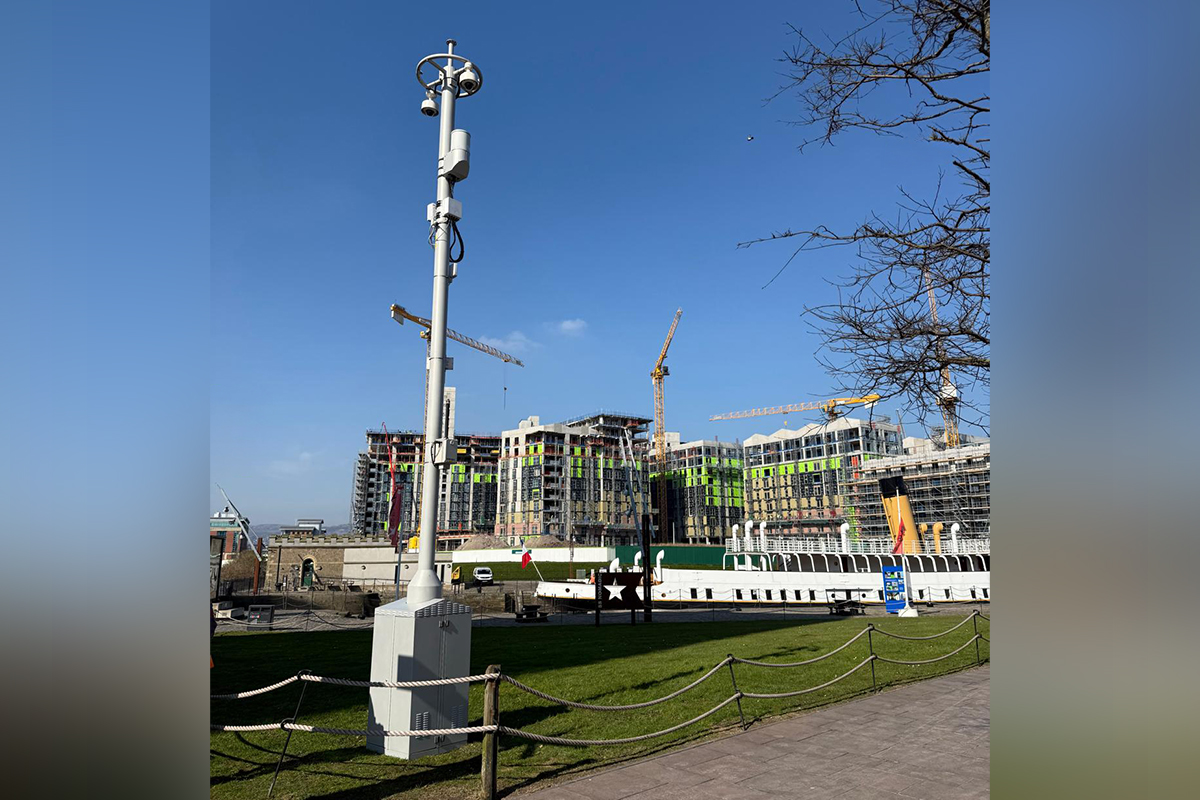
This included utilising the harbour’s CCTV infrastructure to host small cell antennas along the route. Small cells are just one part of BT’s role, but they are significant because using mobile coverage from the nearby macro-network would not be sufficient for such a complex project that requires extremely stable and high-capacity connectivity for autonomous vehicles. This demonstrates how small cells can be utilised for challenging and innovative city projects now and in the future.
Delivering the small cell solution:
- To ensure the designated route was supported by a 5G signal (for activation of the CCTV inside the bus), BT had to identity existing street furniture or assets along the route to deploy 5G/4G small cells.
- Six CCTV columns were selected, which were owned by the Harbour authority and provided an ideal candidate due to each columns’ robust design, which was able to take the weight of the small cell equipment.
- However, due to planning restrictions, BT had to come up with a new design that meant splitting the equipment between being hosted at height and within the column base, with a new ‘wrap‑around’ cabinet (with heated dispensing air system) – a UK first.
- The operator also had to agree a legal licence document with the Harbour authority to ensure it obtained legal rights, which needed to be in place before it could deploy equipment on the CCTV columns.
- The six locations were deployed within a six‑month timeframe.
- The six locations are now live – delivering both a 4G and 5G signal within the Harbour footprint, and enabling testing of the autonomous vehicles.